The three-name rule for cats
Old Possum's Book of Practical CatsThe three-name rule for cats is the organizing idea of The Naming of Cats: a cat’s identity cannot be exhausted by the name its household uses. The poem describes three distinct kinds of name, moving from the familiar and public toward a private knowledge that human inquiry cannot reach. Its playful catalogue therefore sets out more than a naming convention; it gives each cat an identity with an intimate, ultimately inaccessible centre.
Identity and Premise
The poem presents naming as a serious matter rather than a holiday game. That insistence turns a subject that might seem like a joke into a small theory of feline identity: a cat requires three different names, not one name repeated in different circumstances. The statement is emphatic, but the scheme that follows makes its meaning precise. The names occupy separate social and imaginative positions, and each answers to a different way of knowing the cat.
The structure also corrects an initial impression of absurdity. The speaker anticipates that the claim may sound like madness, then answers with the rule itself. This comic framing invites skepticism only to replace it with an orderly account. The poem does not offer a practical procedure for selecting all three names; instead, it explains why ordinary human naming can account for only part of a cat’s identity.
The Familiar and the Particular Names
The first name is the one used by the family every day. The examples include Peter, Augustus, Alonzo, James, Victor, Jonathan, George, and Bill Bailey. These names belong to routine domestic address: they are available for ordinary use, and their usefulness does not depend on being unique. The list makes this first category concrete through familiar personal names rather than through a special feline vocabulary.
The second name is particular to the individual cat and is described as peculiar and more dignified. The poem supplies such examples as Munkustrap, Quaxo, Coricopat, Bombalurina, and Jellylorum, then states the defining restriction: names of this kind never belong to more than one cat. Unlike the family name, this one marks singularity. The poem links that distinction to a cat’s bearing, asking how the cat could keep its tail perpendicular, spread its whiskers, or cherish its pride without a name suited to its dignity. The name is not merely an identifying label; in the poem’s account, it belongs with the cat’s self-possession.
The Name Beyond Human Knowledge
Above and beyond those two usable kinds of name lies a third. It is not simply another unusual name in the catalogue: the poem says that no one will guess it and no human research can discover it. The boundary is therefore one of knowledge as well as vocabulary. A more elaborate public name may distinguish one cat from every other, but it still does not disclose the innermost name.
The cat alone knows this final name and will never confess it. That refusal leaves the rule deliberately incomplete from the human point of view. The poem identifies the existence and owner of the secret without revealing its content, preserving a private domain that even the speaker’s explanation cannot penetrate. The third name is thus both a component of the rule and its limit: the reader is told what kind of knowledge is withheld, not what the name is.
Meditation and the Unspoken Name
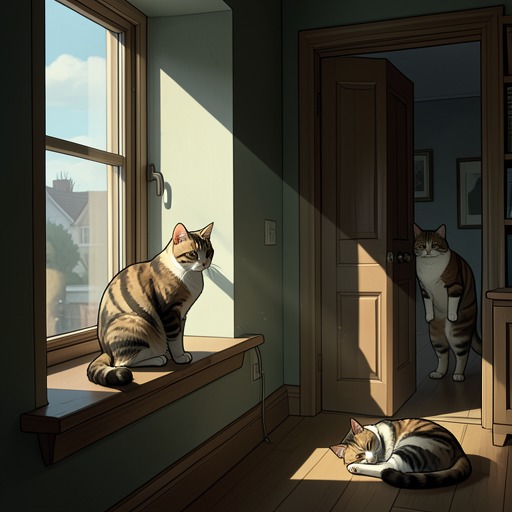
The poem gives an observable sign for this inward life: a cat in profound meditation is contemplating its name. The claim makes the private name active without making it public. A familiar posture becomes evidence, within the poem’s playful logic, of thought turned toward something inaccessible to human observers. The meditation does not solve the mystery; it points back to it.
The repeated phrase about the thought of the name slows the verse and enacts its subject. The name is approached through recurrence, but never stated. The closing sequence calls it ineffable and effable, then joins those apparent opposites in Effanineffable before describing it as deep, inscrutable, and singular. The verbal play suggests that language can circle the private name, even form a word around its paradox, while stopping short of disclosure.
The Rule’s Significance
The three categories establish a progression from social use to individual distinction and then to solitary knowledge. Family members can use the first name; the second separates one cat from all others; the third belongs to the cat’s own consciousness. The poem’s catalogue and its explicit rule keep these levels distinct, while the repeated attention to the final name gives the whole scheme its mystery.
The result is an affectionate but firm limit on human understanding. People may name and address a cat, and may recognize the particular name that gives it distinction, yet the deepest name remains beyond research and confession. By ending not with a revelation but with the cat’s continued silence, The Naming of Cats makes that withheld knowledge the rule’s decisive feature.